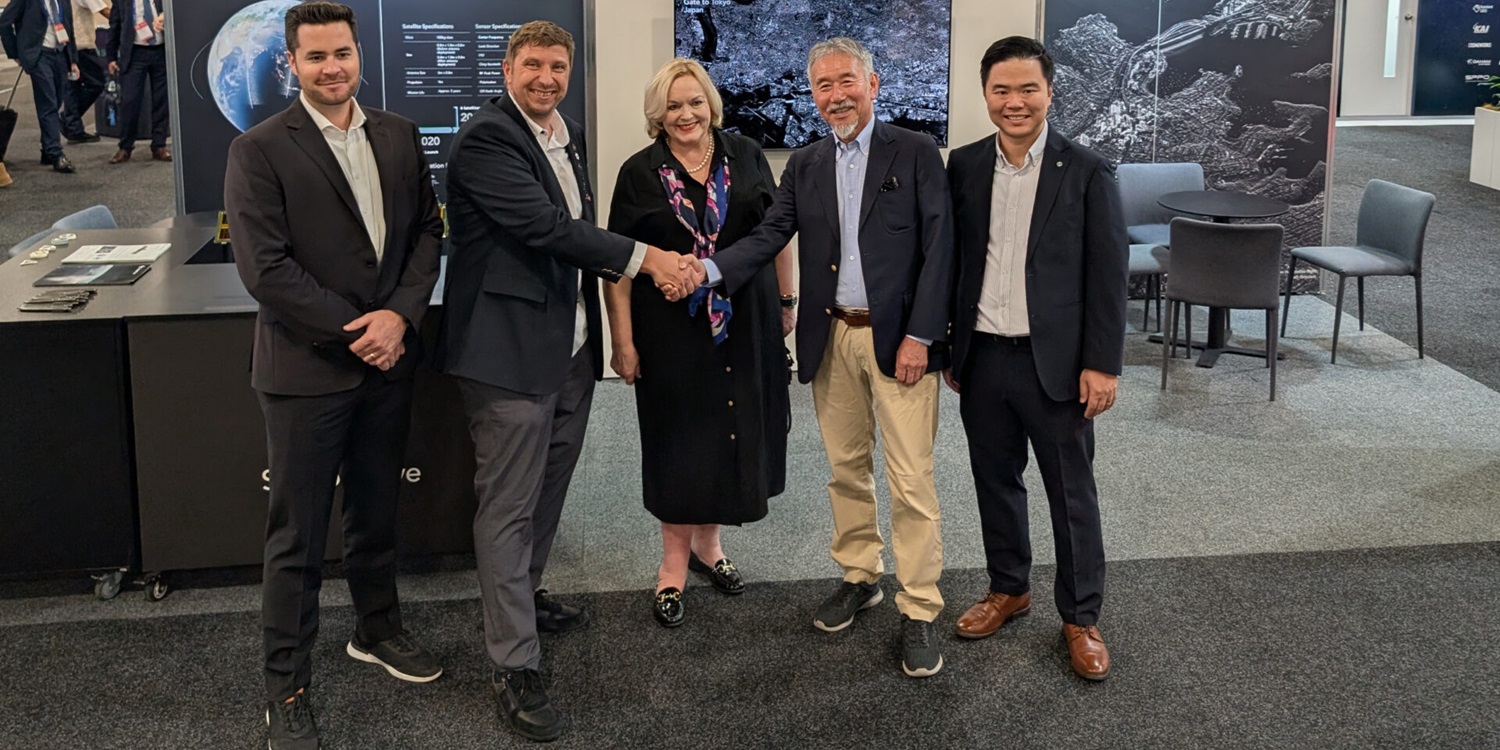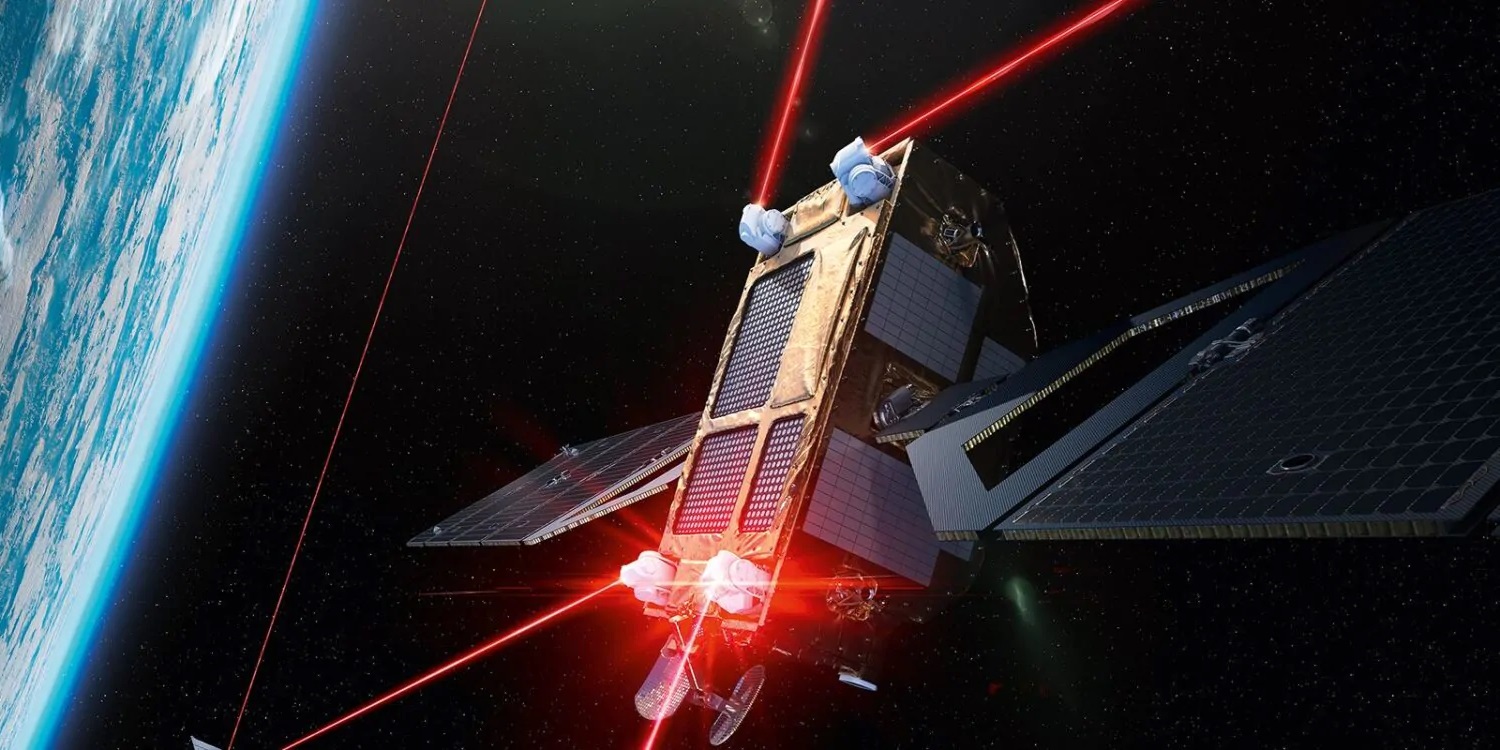
Rocket Lab Corporation (Nasdaq: RKLB) (“Rocket Lab” or “the Company”), a global leader in launch services and space systems, today announced it has completed the acquisition of Mynaric AG (“Mynaric”), a leading provider of laser optical communications terminals for air, space, and mobile applications. Rocket Lab paid an aggregate consideration value of $155.3 million consisting of a nominal cash payment and 2,277,002 shares of Rocket Lab’s Common Stock. The acquisition further strengthens Rocket Lab’s extensive capabilities as a leading launch provider, spacecraft manufacturer, and supplier of satellite components at scale to the global space market.

“Laser communication is a key enabler for satellite constellations, but it has long been a supply chain pain point for commercial and government constellation operators. High-performing and cost-effective products simply have not been available in high volumes. That changes today with Mynaric now officially part of Rocket Lab,” said Sir Peter Beck, founder and CEO of Rocket Lab. “We have a strong track record of unlocking satellite subsystem bottlenecks, making industry-leading technology affordable and available at scale. We look forward to joining forces with the Mynaric team to do the same for laser communications.”

The completion of the transaction comes after successful review and approval by Germany’s Federal Ministry for Economic Affairs and Energy. Mynaric will continue to be headquartered in Munich, Germany, establishing Rocket Lab’s first European footprint and enabling the Company to expand its ability to support German and broader European space programs.

An important driving factor behind the acquisition decision was Rocket Lab’s extensive insight into the Mynaric team and technology, thanks to Mynaric providing CONDOR Mk3 optical communication terminals for Rocket Lab's $1.3 billion prime contracts to produce 36 satellites for the Space Development Agency (SDA) Proliferated Warfighter Space Architecture. This relationship gave Rocket Lab a high degree of confidence in the Mynaric team and technology, while also giving the Company insight into how the products could be scaled and efficiencies achieved to meet rapidly growing customer demand. Mynaric is also a supplier to other SDA contracts, and Mynaric and Rocket Lab share many customers spanning commercial constellation operators, satellite prime contractors, and defense and civil government agencies.

About Rocket Lab

About Rocket Lab Rocket Lab is a leading space company that provides launch services, spacecraft, payloads and satellite components serving commercial, government, and national security markets. Rocket Lab’s Electron rocket is the world’s most frequently launched orbital small rocket; its HASTE rocket provides hypersonic test launch capability for the U.S. government and allied nations; and its Neutron launch vehicle in development will unlock medium launch for constellation deployment, national security and exploration missions. Rocket Lab’s spacecraft and satellite components have enabled more than 1,700 missions spanning commercial, defense and national security missions including GPS, constellations, and exploration missions to the Moon, Mars, and Venus. Rocket Lab is a publicly listed company on the Nasdaq stock exchange (RKLB).

Source: Rocket Lab
Share on Social Media

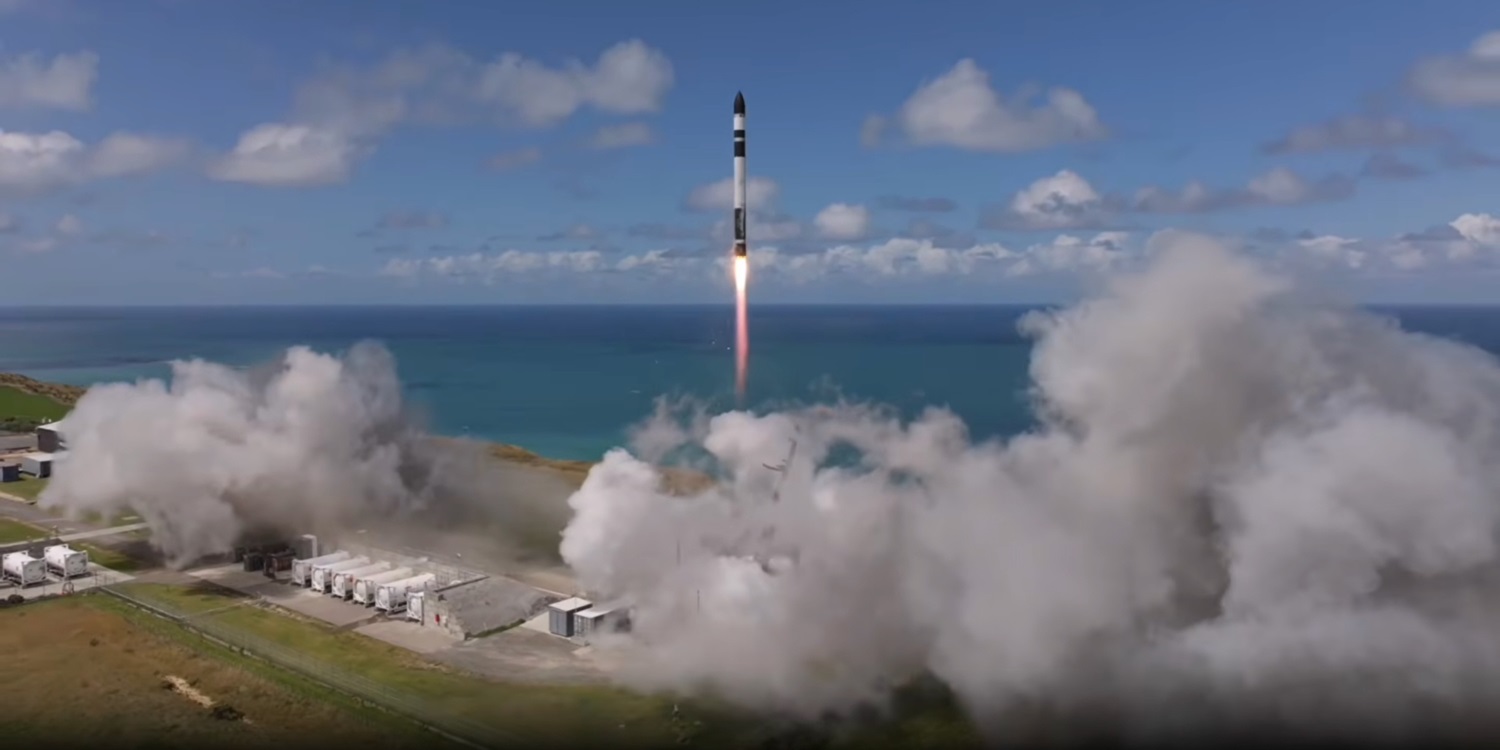
Rocket Lab Corporation (Nasdaq: RKLB) (“Rocket Lab” or “the Company”), a global leader in launch services and space systems, today successfully launched its 81st Electron rocket and second launch in eight days to deploy a satellite for an Earth-observation constellation by the Korea Advanced Institute of Science and Technology (KAIST), Korea’s leading university dedicated to science and technology.

‘Bridging The Swarm’ lifted off on January 30th at 2:21 p.m. NZDT (01:21 UTC) from Rocket Lab’s private orbital launch site, Launch Complex 1 in New Zealand, to deploy the NEONSAT-1A satellite to a 540 km low Earth orbit. NEONSAT-1A is an advanced Earth observation satellite that will test the capabilities of the South Korean government’s future constellation of NEONSAT satellites to monitor natural disasters and national security events along the Korean Peninsula. The first satellite of this constellation, NEONSAT-1, was deployed by Rocket Lab in 2024 on a mission called ‘Beginning of The Swarm’.

Rocket Lab founder and CEO, Sir Peter Beck, says: “Two launches in eight days is a strong start to the year that speaks volumes about the demand for Electron and the excellence and dedication of the Rocket Lab team. We cemented our position as the leader in reliable and responsive launch with our record-breaking year of launches in 2025, and these latest launches show we’re gearing up for an even busier launch year in 2026.”

“Bridging The Swarm” was Rocket Lab’s second mission of 2026 and 81st launch overall. Upcoming launches in 2026 include missions for commercial Earth observation, international space agencies, national security, and hypersonic technology development.

About Rocket Lab

About Rocket Lab Rocket Lab is a leading space company that provides launch services, spacecraft, payloads and satellite components serving commercial, government, and national security markets. Rocket Lab’s Electron rocket is the world’s most frequently launched orbital small rocket; its HASTE rocket provides hypersonic test launch capability for the U.S. government and allied nations; and its Neutron launch vehicle in development will unlock medium launch for constellation deployment, national security and exploration missions. Rocket Lab’s spacecraft and satellite components have enabled more than 1,700 missions spanning commercial, defense and national security missions including GPS, constellations, and exploration missions to the Moon, Mars, and Venus. Rocket Lab is a publicly listed company on the Nasdaq stock exchange (RKLB).

Source: Rocket Lab
Share on Social Media

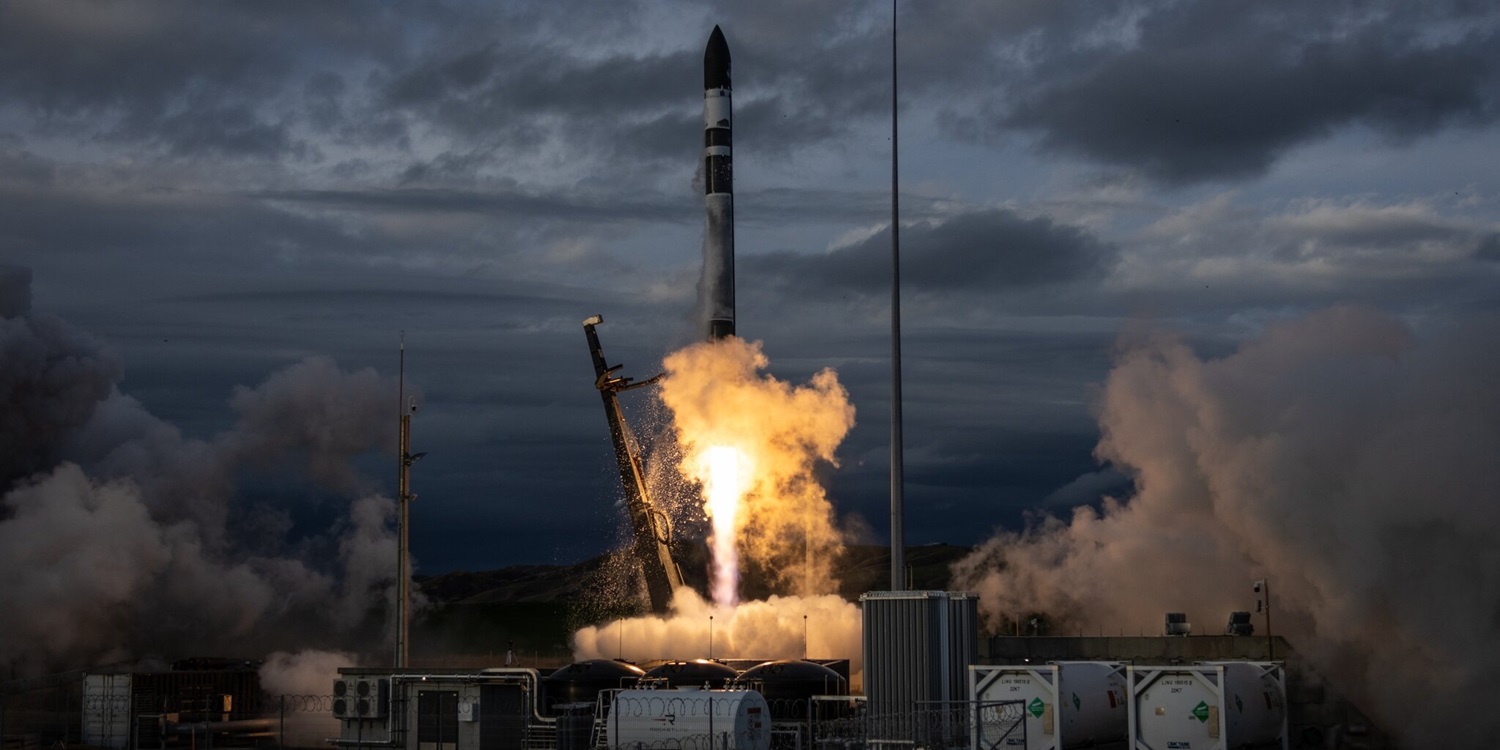
Rocket Lab Corporation (Nasdaq: RKLB) (“Rocket Lab” or “the Company”), a global leader in launch services and space systems, today successfully launched its 21st Electron rocket of the year to deploy the latest satellite to space for multi-launch customer Institute for Q-shu Pioneers of Space, Inc. (iQPS), a Japan-based Earth imaging company.

‘The Wisdom God Guides’ mission launched from Rocket Lab Launch Complex 1 in New Zealand on December 21 at 7:36 p.m. (06:36 UTC) to deploy the QPS-SAR-15 to space for iQPS. The spacecraft will join the company’s synthetic aperture radar (SAR) constellation providing near-real time imagery across twelve different orbits for iQPS’ global customers. Rocket Lab first launched for iQPS in 2023 and has gone on to deploy seven satellites to the iQPS constellation, making Electron the primary launcher for iQPS. A further five launches on Electron for iQPS are planned from 2026.

Today’s mission has set a new annual launch record for Electron: 21 launches in one year with 100% mission success. The record cements Electron as both America’s preeminent small launch provider and the world’s most frequently-launched small-lift orbital rocket.

Rocket Lab founder and CEO, Sir Peter Beck, says: “Congratulations to iQPS on this latest successful mission for their constellation, and to the Rocket Lab team on a fantastic record-setting year of Electron launches. Electron makes frequent and reliable launch look easy as it outpaces all other American small-lift orbital rockets, year after year. In 2026 we’re expanding Electron’s global reach with more multi-launch constellation deployments, dedicated missions for domestic civil space and international space agencies in Japan and Europe, and both suborbital and orbital launches with defense applications for hypersonic technology and national security. Our new record of annual launches and the breadth of upcoming missions goes to show how much of a global impact Electron continues to have on the space industry, and we’re looking forward to another year of continued execution in 2026.”

‘The Wisdom God Guides’ mission was Rocket Lab’s 79th overall Electron mission and final scheduled launch for 2025. The next Electron launch is slated to take place in early Q1 2026.

About Rocket Lab

Rocket Lab is a leading space company that provides launch services, spacecraft, payloads and satellite components serving commercial, government, and national security markets. Rocket Lab’s Electron rocket is the world’s most frequently launched orbital small rocket; its HASTE rocket provides hypersonic test launch capability for the U.S. government and allied nations; and its Neutron launch vehicle in development will unlock medium launch for constellation deployment, national security and exploration missions. Rocket Lab’s spacecraft and satellite components have enabled more than 1,700 missions spanning commercial, defense and national security missions including GPS, constellations, and exploration missions to the Moon, Mars, and Venus. Rocket Lab is a publicly listed company on the Nasdaq stock exchange (RKLB).

Source: Rocket Lab
Share on Social Media

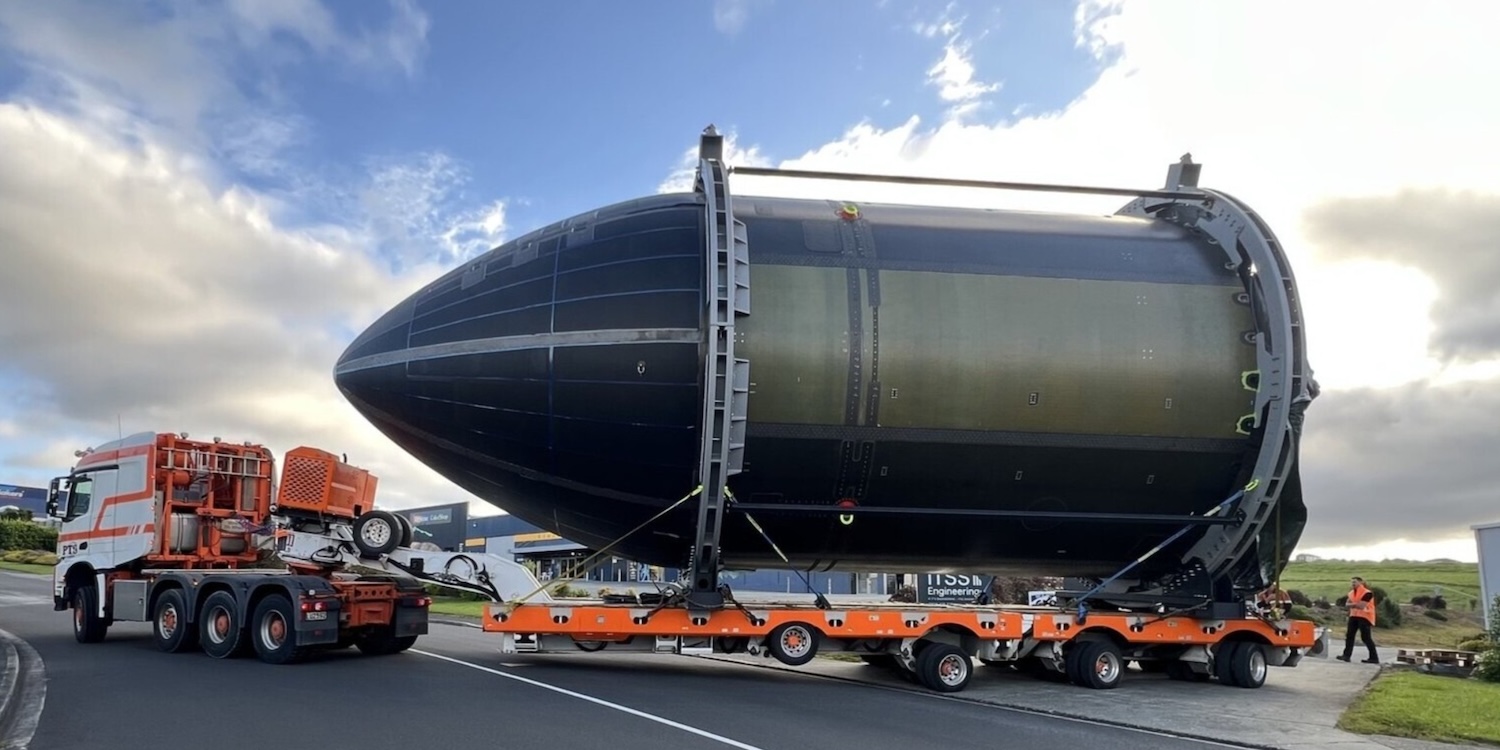
Rocket Lab Corporation (Nasdaq: RKLB) (“Rocket Lab” or “the Company”), a global leader in launch services and space systems, today announced the Neutron launch vehicle’s innovative “Hungry Hippo” captive fairing has successfully completed qualification testing and is enroute to Virginia for Neutron’s first launch.

Dubbed the Hungry Hippo, Neutron’s fairing halves remain attached to the rocket’s first stage throughout launch and landing back to Earth – a world-first for a reusable commercial rocket. Whereas typical rockets’ fairing halves fall away during launch and are disposable or require collection at sea for reuse, Neutron’s fairing halves open to release the rocket’s second stage and mission payload before closing again to return Neutron to Earth as a single reusable vehicle, enabling rapid and cost-effective reuse and streamlining operations for a high-cadence launch service for commercial, civil, and national security missions.

The qualification is a key moment in the development of the reusable Neutron rocket, the world’s largest carbon composite launch vehicle with a lift capacity of up to 13,000kg (33,000 pounds). With the design, structure, and operations of Neutron’s innovative fairing now qualified for flight, Hungry Hippo is enroute to Rocket Lab’s Launch Complex 3 at the Mid-Atlantic Regional Spaceport in Virginia ahead of Neutron’s first launch. Development of Neutron began in late 2021 and with the first launch scheduled for liftoff in 2026, it remains on track to be one of the fastest commercially developed rockets in history.

Rocket Lab Vice President – Neutron, Shaun D’Mello, says: “A rocket like Neutron has never been built before, and we’re doing it at a pace and price point that’s going to bring the innovation and competition needed in today’s industry. Building, qualifying, and shipping Hungry Hippo is a fantastic marker of progress toward Neutron’s first launch, and I’m proud of the team for their attention to detail and pulling off this significant milestone.”

Hungry Hippo Qualification Program

To qualify the Hungry Hippo fairing for Neutron’s first launch, Rocket Lab completed an intensive qualification and acceptance testing campaign that validated the structure’s expected performance during the intense aerodynamic pressure of launch and re-entry featuring full-scale tests as well as a series of sub-component tests. Tests have included (but are not limited to):
  • 275,000 pounds of force distributed across the Hungry Hippo’s carbon composite structure to simulate the load experienced during Max Q, the stage of flight where the rocket experiences maximum aerodynamic pressure.
  • Opening and closing the fairing halves under flight-like conditions in 1.5 seconds, less than half the time required for a successful stage separation and vehicle reorientation for descent.
  • Flight-like operations combining flight software, avionics, GNC systems, and more, controlling both the canard actuation and fairing actuation systems, and using flight hardware for all avionics, harnessing, and mechanical systems.
  • Combined torque and bending loads introduced at the canard hubs where the vehicle’s aerodynamic control surfaces, or canards, are integrated to Neutron’s fairing structure. These tests exceeded 125% of the load expected through all phases of flight.
  • Exceedance of the handling loads that Hungry Hippo will experience throughout Neutron’s full lifecycle: from integration of the Stage 2 that is attached to the interior of the rocket through to the full assembly Neutron and integration of the launch vehicle onto the launch mount, as well as recovery of the launch vehicle from its landing barge named ‘Return On Investment’.

Once Hungry Hippo arrives in Virginia, the fairing structure will be integrated to Neutron’s first stage in final flight configuration to undergo pre-launch testing, including static fires and a Wet Dress Rehearsal, at Launch Complex 3 ahead of first launch.

About Rocket Lab

Rocket Lab is a leading space company that provides launch services, spacecraft, payloads and satellite components serving commercial, government, and national security markets. Rocket Lab’s Electron rocket is the world’s most frequently launched orbital small rocket; its HASTE rocket provides hypersonic test launch capability for the U.S. government and allied nations; and its Neutron launch vehicle in development will unlock medium launch for constellation deployment, national security and exploration missions. Rocket Lab’s spacecraft and satellite components have enabled more than 1,700 missions spanning commercial, defense and national security missions including GPS, constellations, and exploration missions to the Moon, Mars, and Venus. Rocket Lab is a publicly listed company on the Nasdaq stock exchange (RKLB).

About Neutron

Rocket Lab’s Neutron launch vehicle is a powerful new solution designed to deliver a cost-effective, reliable, and responsive launch service for commercial and government missions and to help solve bottlenecked launch across the global space industry. Designed for reusability, responsive launch, and orbital insertion accuracy for up to 13,000 kg of payload, Neutron will set a new standard for performance and reliability for the highest-priority defense and national security missions, commercial satellite constellations, and civil space exploration. Neutron utilizes a unique design that brings the Stage 1 and payload fairing back to Earth as a single, integrated stage that maximizes cadence in a 13-ton to orbit reusable performance capability. The advanced design of Neutron includes carbon composite for all of the rocket’s major structures and an innovative upper stage that enables high-performance for complex satellite deployments, including the deployment of satellite mega-constellations. Neutron is powered by nine Archimedes engines on Stage 1, and one vacuum-optimized Archimedes engine on Stage 2. Neutron operates from Rocket Lab Launch Complex 3 (LC-3) located at Wallops Island, Virginia from the Mid-Atlantic Regional Spaceport (MARS).

Source: Rocket Lab

Share on Social Media

Rocket Lab Corporation (Nasdaq: RKLB) (“Rocket Lab” or “the Company”), a global leader in launch services and space systems, today announced it has secured a second multi-launch contract with Synspective, a leading Synthetic Aperture Radar (SAR) satellite data and analytics company from Japan. The new contract for a further 10 dedicated Electron launches brings the total number of upcoming Synspective missions to 21 – marking the largest order of dedicated Electron missions with a single customer to date.

Following the first launch agreement announced in June 2024, this second multi-launch contract within 18 months further solidifies Electron’s international expansion and leadership of the small lift launch market globally. This latest contract secures the launch of 21 StriX SAR satellites across multiple missions through to the end of the decade.

Rocket Lab has been Synspective’s sole launch provider to-date, successfully deploying six StriX satellites across six dedicated launches from Rocket Lab Launch Complex 1 in New Zealand. The next 21 Synspective launches will take place from the same launch site, with Rocket Lab’s schedule flexibility, tailored launch service, and streamlined operations central to Synspective’s decision to extend its previous multi-launch contract.

Rocket Lab founder and CEO, Sir Peter Beck, says: “Regular and reliable launch on a flexible schedule is essential to the build out of Synspective’s constellation, and Electron has been integral to this from the start as the sole launcher of all StriX satellites in space today. It’s an honor to add another 10 StriX satellites to Electron’s launch manifest and continue our long-standing partnership with Synspective.”

Synspective founder and CEO, Dr. Motoyuki Arai, said: “Rocket Lab’s precision and track record have consistently enabled us to stay on schedule and achieve our mission objectives. As we move forward with 21 launches, our continued collaboration is crucial to accelerating the deployment of our SAR satellites and the growth of our data platform.”

Electron’s reliability, proficiency at executing against rapid timelines, and satellite deployment accuracy to within meters of its target, has made it the commercial launch vehicle of choice for satellite operators wanting to build out their constellations with precision. The majority of Electron launches this year have either been the continuation of multi-launch contracts with commercial constellation customers, or have completed the entire deployment of a constellation in less than a year.

About Synspective

Synspective Inc., founded in 2018, develops and operates Synthetic Aperture Radar (SAR) satellites, providing SAR data and analytics solutions. We aim to develop a constellation of 30 SAR satellites by the late 2020s, enabling the creation of a new system that can observe changes anywhere on Earth. With a SAR satellite constellation that enables high-frequency and high-resolution Earth observation, Synspective delivers satellite data and various analytics solutions for disaster response and management, national security, and environmental monitoring.

Source: Rocket Lab

Share on Social Media

More Articles …