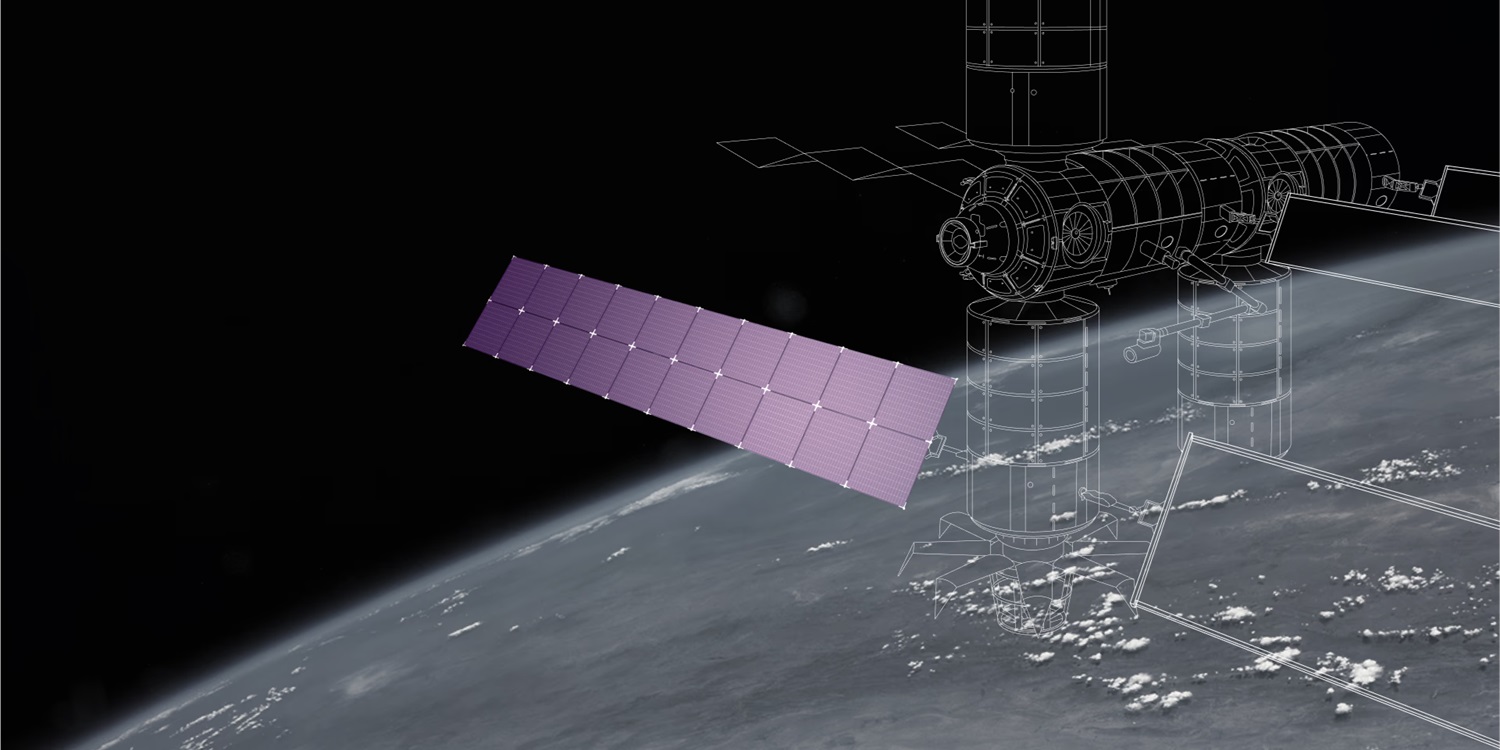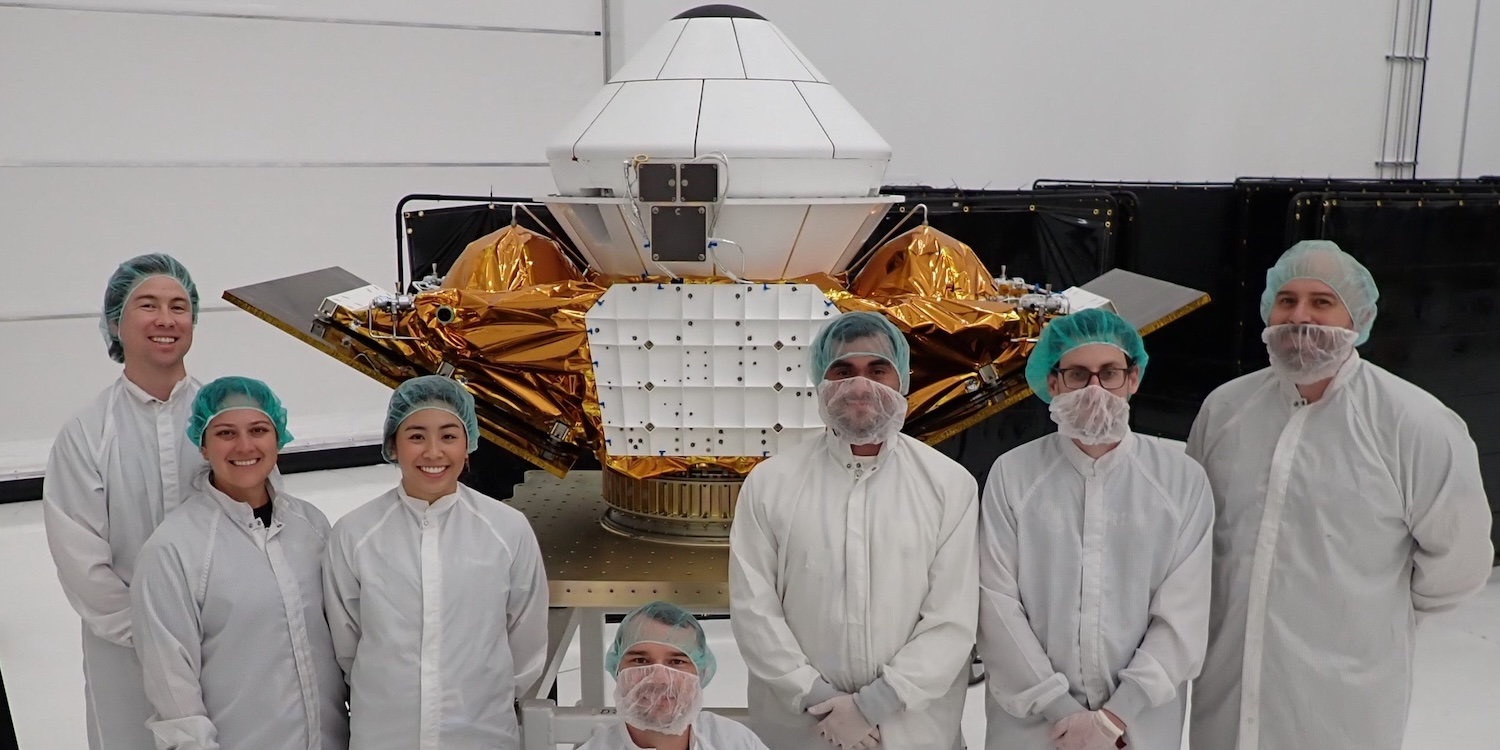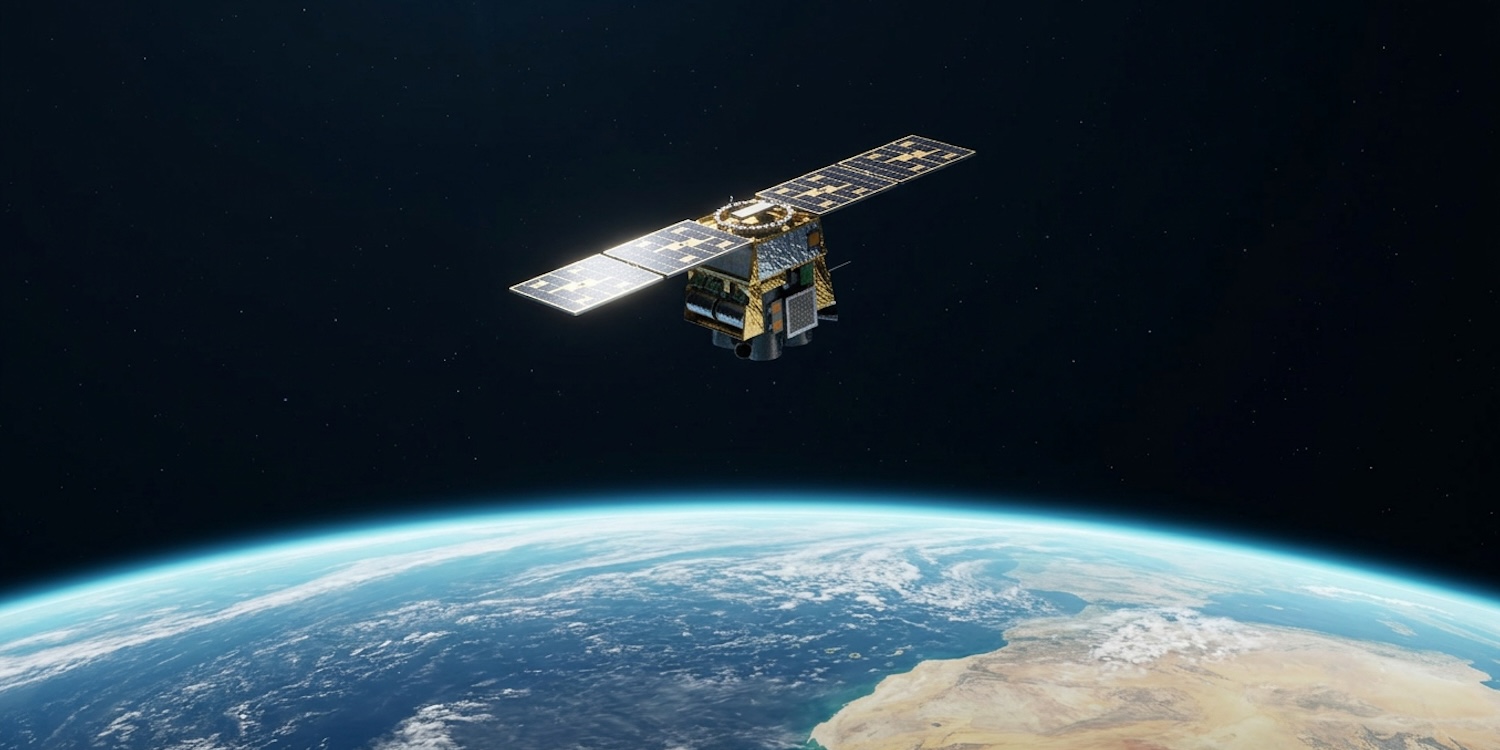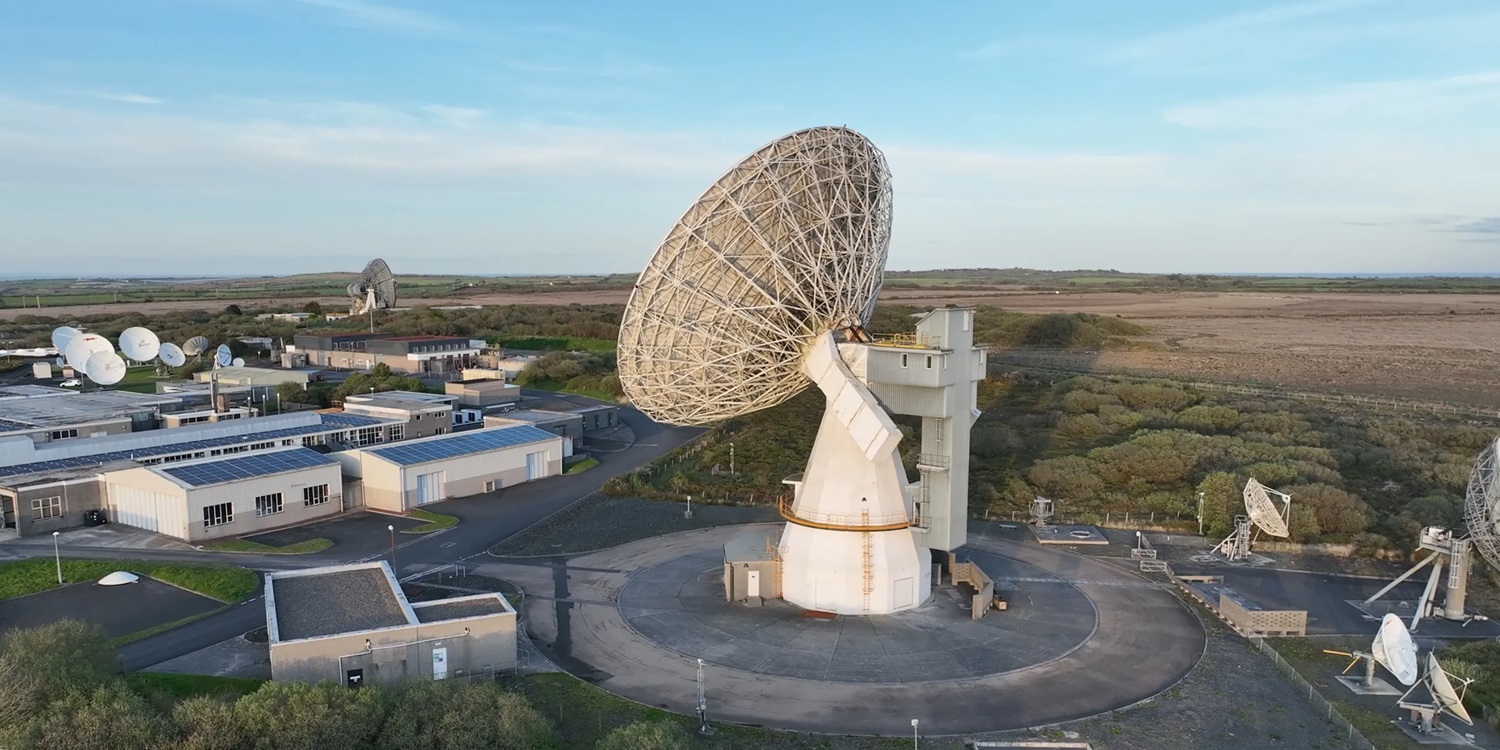
Intuitive Machines, Inc. (Nasdaq: LUNR) (“Intuitive Machines”, together with its subsidiaries, the “Company”), a space technology, infrastructure, and services leader, today announced it has entered into a definitive agreement to acquire Goonhilly Earth Station Ltd. (“Goonhilly”), a world-class deep space communications provider with major ground station assets in the United Kingdom and Goonhilly USA Inc. (dba COMSAT). The acquisition, which will include the Goonhilly Lunar and Deep Space Communications, Commercial Satcom, and Defense and Security divisions, significantly expands global ground station resources and capacity on Intuitive Machines’ integrated space-to-ground network. Upon completion of the proposed acquisition, the expanded network is expected to deliver communications, data transport, and position, navigation, and timing (PNT) capabilities for sustained lunar and cislunar operations.

Goonhilly’s and COMSAT’s civil, commercial, and government customers are expected to complement Intuitive Machines’ existing customer base and broaden the Company’s reach into adjacent industries. Upon completion of the acquisition, its strategic UK location will expand visibility across major Earth‑viewing arcs, increasing contact opportunities for lunar and deep‑space missions. With deep expertise in antenna planning, scheduling, and station maintenance, Goonhilly’s ground station assets and competencies strengthen Intuitive Machines’ ability to deliver end‑to‑end mission support.

“Customers have been clear that they want a single, integrated, and resilient solution for their communications and PNT needs as they accelerate missions at an unprecedented pace,” said Steve Altemus, co‑founder and CEO of Intuitive Machines. “Our partners of integrated space‑to‑ground network are configured to support missions across LEO, lunar, and cislunar environments through a single source for communications, PNT, and data transport. Goonhilly will provide the backbone for this network, scales our global ground presence and will bring a strategic core competency to the Intuitive Machines team.”

The Intuitive Machines space-to-ground network combines a lunar data-relay constellation with a global ground segment to maintain persistent line-of-sight communications with the Moon. Goonhilly is expected to enhance this architecture with deep space assets, including the GHY6 32-meter antenna, the cryogenically cooled GHY3 30-meter antenna, and multiband support across X-band, S-band, and Ka-/Ku-band. This will give customers greater flexibility in mission design and more options for communicating with spacecraft throughout lunar and deep space operations.

“Goonhilly has spent years building a world class deep space communications capability,” said Kenn Herskind. Executive Chairman of Goonhilly. “Joining Intuitive Machines will allow us to scale that capability globally and directly support the next era of lunar exploration. Together, we will be creating a commercial lunar communications network that is interoperable, resilient, and ready to support Artemis and international missions.” The transaction is expected to close in the third quarter of 2026, subject to customary closing conditions, including the receipt of applicable regulatory approvals, including under the UK National Security and Investment Act 2021 and from the US Federal Communications Commission.

About Intuitive Machines

Intuitive Machines is a leading space infrastructure company that builds spacecraft, connects networks, and operates infrastructure-as-a-service for commercial, civil, and national security customers.  With a proven track record across the space domain, the Company, through organic growth and portfolio expansion, has built over 300 spacecraft, delivered over 260 kilograms of payload to the lunar surface, and provided precision navigation expertise that has guided spacecraft across our solar system. These capabilities form an integrated Built-Connect-Operate infrastructure service company, enabling customers to achieve mission and campaign outcomes through a single prime solution. Intuitive Machines’ technology has been demonstrated across the space domain and is engineered to support the next century of opportunity in space.

Source: Intuitive Machines
Share on Social Media

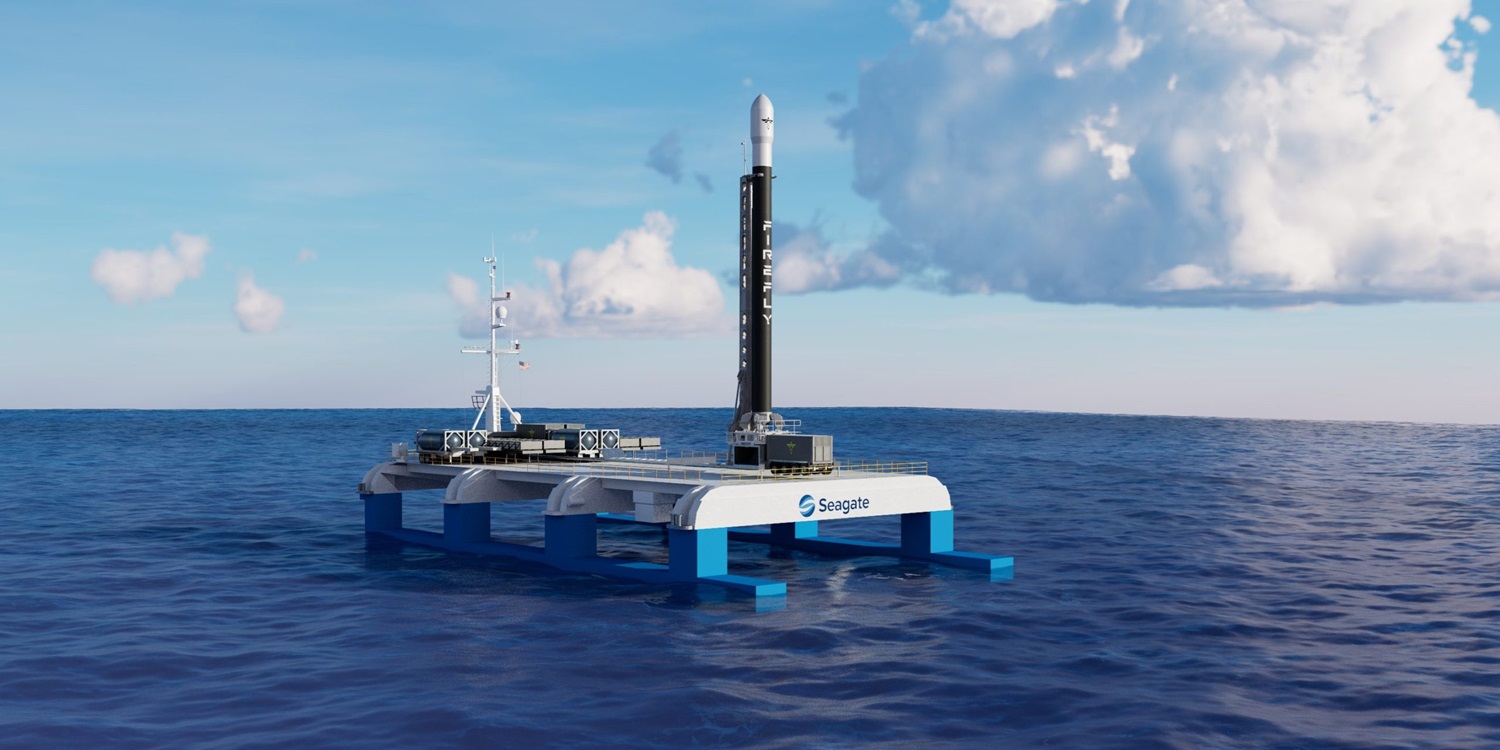
Oceaneering International, Inc. and Seagate Space Corporation today announced a strategic relationship to advance the development of Seagate Space’s offshore launch platform design. The two companies signed a memorandum of understanding (MOU) to establish a long-term collaboration spanning system development, engineering maturation, integration support, and future production opportunities. The joint announcement was formalized at the 2026 Space Symposium in Colorado Springs, CO.

Seagate Space co-founder and CEO Michael Anderson said: “We are thrilled to work with Oceaneering to bring our Gateway platform concept to our launch partners with speed, technical rigor, and a clear path to scale.”

“Oceaneering is a proven offshore leader with decades of spaceflight heritage. Their experience at the intersection of maritime and space systems makes them an ideal partner as we advance offshore launch infrastructure.”

Oceaneering provides advanced engineering services and products across offshore energy, defense, aerospace, and science. Its space systems division has supported major programs including the Space Shuttle, International Space Station, and NASA’s Artemis mission.

Kirsten Whittingham, VP/GM of Oceaneering Space Systems said: “The Seagate Space team and their unique approach shows the potential for offshore launch while directly addressing the challenges. We look forward to working together to redefining what’s possible for the space industry.”

Seagate Space recently received Approval in Principle (AiP). from American Bureau of Shipping, the first to do under the classification society’s offshore spaceport requirements. The company successfully completed wave basin testing at MIT’s Parsons Hydrodynamics Laboratory earlier this year, with initial offshore missions targeted as early as 2027.

Founded in 2025, Seagate Space is based out of spARK Labs in St. Petersburg, Florida. Seagate Space Corporation announced earlier this month a Memorandum of Understanding (MOU) with Firefly Aerospace to collaborate on the development of an offshore launch platform that enables a sea-based launch capability for Firefly’s Alpha rocket. This collaboration marks a significant milestone in expanding responsive, resilient launch solutions for the rapidly growing space economy. Under the MOU, Seagate Space is working closely with Firefly to mature the design of an integrated offshore launch system capable of supporting the unique requirements of liquid-fueled orbital rockets. Central to this development is the integration of Seagate Space’s Gateway Series, the industry’s first purpose-built offshore spaceport designed specifically for launch operations. Seagate Space collaborated with maritime industry leaders on Gateway’s development, and the American Bureau of Shipping recently announced the system received “Approval in Principle” – the first to do so under their offshore spaceport guidelines. Seagate Space also conducted precision testing using a model prototype at the MIT Sea Grant Hydrodynamics Laboratory to validate key capabilities in ocean conditions that are required for safe, reliable orbital launch operations from sea.

Source: Seagate Space

Share on Social Media

Sophia Space Inc., a pioneer in modular, AI-optimized, passively cooled compute technology for space applications, today announced the signing of a commercial agreement with Kepler Communications Inc. to advance a comprehensive collaboration across orbital compute and connectivity. This effort will demonstrate Sophia Space’s Orbital Data Center (ODC) software on orbit, while leveraging Kepler’s optical data relay network to enable distributed, resilient compute infrastructure in space.

“Partnering with Kepler allows us to accelerate our vision of bringing modular, low-latency compute to space while demonstrating real-world operational capability,” said Rob DeMillo, CEO and Co-founder of Sophia Space. “This collaboration opens the door to new opportunities for our TILEs and ODC software—from hosted payloads to joint optical data nodes—while advancing a fundamentally new class of distributed computing systems designed to operate reliably in the harsh conditions of orbit.”

Under the agreement, Sophia Space will deploy space-optimized software and operate distributed, NVIDIA-powered edge compute nodes on Kepler satellites, beginning in Q4 2026. These demonstration missions are designed to validate not only software and hardware integration in orbit, but also distributed node management at scale, enabling orchestration of high-volume workloads across multiple spacecraft.

Sophia Space’s ODC software is specifically designed for fault-tolerant, radiation-aware computing, ensuring survivability and operational continuity in the presence of single-event upsets, system faults, and degraded conditions inherent to the space environment. The platform supports resilient distributed operations, allowing workloads to dynamically shift across nodes, maintain uptime, and continue processing even amid partial system failures.

The collaboration will also demonstrate multi-tenant, enterprise-grade compute operations in orbit, moving beyond single-purpose payloads toward a flexible, shared infrastructure model. Initial use cases include AI-driven, high-resolution global weather forecasting and space domain awareness (SDA) analytics, leveraging space-based data pipelines powered by NVIDIA Jetson Orin modules. By utilizing AI and high-performance computing frameworks at the edge, workloads can be executed, distributed, and dynamically orchestrated across multiple nodes in orbit via Kepler’s high speed optical network; enabling real-time inference, multi-sensor data fusion, and autonomous data processing with reduced downlink and reliance on terrestrial infrastructure.

“Open collaboration and interoperability are essential to building a resilient space-based network,” said Mina Mitry, CEO and Co-founder of Kepler Communications. “Unlike closed systems, our partnership with Sophia Space enables multiple partners to leverage a shared infrastructure, accelerating innovation and delivering real-world value to customers. By working together, we can demonstrate how modular compute and advanced connectivity coexist seamlessly in orbit, setting a new standard for the future of space networks.”

Beyond initial demonstration missions, the agreement establishes a framework for multi-partner collaboration, with Sophia Space utilizing the Kepler network for high-speed optical and RF data relay. This architecture supports distributed processing pipelines in orbit, reducing the need to downlink raw data and enabling near real-time decision-making.

The collaboration also explores longer-term commercial and technical collaboration, including the joint development of Optical Data Center Nodes on future Kepler satellites; designed to support scalable, fault-tolerant compute clusters in space.

About Sophia Space Inc.

Sophia Space is building the future of orbital computing and in-space data centers. Its modular Tile technology enables in-situ data processing, AI acceleration, and edge computing for satellites, defense systems, and commercial space stations—dramatically reducing latency and delivering actionable insights where and when they are needed.

About Kepler Communications Inc.

Kepler Communications Inc. is an international satellite telecommunications company, providing global, low-latency connectivity for IoT, enterprise, and space-based applications. Its advanced constellation and network infrastructure enable seamless, high-throughput data transmission, bridging the gap between space operations and Earth-based networks. The company's stated mission is to create the internet for space and allow-in-space communications for the future space economy.

Source: Sophia Space Inc.

Share on Social Media

Varda Space Industries, the leader in orbital pharmaceutical processing and hypersonic reentry testbeds, announced the launch of its W-6 vehicle with SpaceX's Transporter-16 on March 30th, marking the company's sixth mission overall and its first launch of 2026. W-6 carries a suite of advanced payloads designed to expand the technical foundation for autonomous hypersonic flight and next-generation thermal protection systems. The mission is funded through a partnership between the Air Force Research Laboratory (AFRL) and commercial space entities.

Autonomous Navigation in Hypersonic Flight

The vehicle carries one interior payload, an autonomous navigation system that uses onboard imagery to identify resident space objects, including stars and low Earth orbit satellites, to determine precise vehicle position. The mission represents a critical step toward fully autonomous navigation for hypersonic and reentry vehicles.

Advancing Thermal Protection Systems

W-6 also carries a nose tile developed by Sandia National Laboratory that is embedded with small samples of advanced thermal protection materials. The mission will enable researchers to evaluate material performance under real life hypersonic heating conditions. In addition, two instrumented shoulder tiles on the heatshield will collect in-flight thermal and performance data for NASA. These tiles were made at NASA's Ames Research Center in California's Silicon Valley using an alternative production technique called "eChar." Varda manufactures C-PICA heatshields at the company's headquarters in El Segundo. Originally developed at NASA's Ames Research Center in Silicon Valley, CA, C-PICA (Conformal Phenolic Impregnated Carbon Ablator) is an ablative material that has been used on all six W-series capsules.

Building the Infrastructure for Reliable Return

Together, the three payloads will generate valuable flight data to support continued innovation in thermal protection systems for reusable reentry vehicles and hypersonic platforms. The data will also contribute to strengthening the technical foundation required for resilient U.S. national security space capabilities. W-6 continues Varda's mission to design, build, and return reentry vehicles that expand commercial activity in low Earth orbit. As Varda increases mission cadence in 2026 and into the future, the company is scaling both vehicle production and flight testing to support a growing range of commercial and government customers. "W-6 demonstrates the ways we support our partners in validating critical technologies. By flying through hypersonic conditions that are impossible to replicate on the ground, we can enable rapid advancement of flight platforms." said Jordan Croom, Vice President of Payloads at Varda. "Frequent, reliable reentry is foundational to building a thriving LEO economy — and to ensuring the United States leads in hypersonic capabilities."

About Varda

Varda Space Industries is building the infrastructure for a thriving orbital economy, from in-orbit pharmaceutical processing to reliable and economical hypersonic reentry capsules. The company operates out of El Segundo, California with office and industrial production space and has office space in Washington, D.C. and Huntsville, Alabama.

Source: Varda Space

Share on Social Media

Satellogic, Inc. (NASDAQ: SATL), a vertically integrated geospatial company delivering high-resolution Earth Observation (EO) at unprecedented scale and economics, today (March 18, 2026) announced Merlin, its latest constellation addition designed to enable daily remapping of the entire planet at one-meter resolution and expand the capabilities of its Aleph Observer persistent monitoring product.

The first Merlin satellite is scheduled to launch in October 2026, with full operational capability expected in the first half of 2027. Merlin combines daily global coverage with one-meter spatial resolution, a capability that Satellogic believes is not available in Earth observation systems today. This combination is expected to enable entirely new intelligence applications by allowing organizations to monitor activity continuously and cost-effectively on a planetary scale.

“Merlin is designed to solve a fundamental limitation in Earth observation,” said Emiliano Kargieman, CEO and Co-Founder of Satellogic. “Until now, organizations had to choose between global coverage at low resolution or high-resolution monitoring of a limited number of sites. Merlin removes that trade-off and enables persistent monitoring at planetary scale.”

Expanding Aleph Observer to Planetary Scale

Merlin is designed to significantly expand the capabilities of Aleph Observer, Satellogic’s persistent monitoring product. Today, Aleph Observer enables organizations to monitor hundreds to thousands of locations across their areas of interest. With Merlin, that capability extends to an unlimited number of monitored sites.

Customers will be able to monitor millions of locations simultaneously. Some examples include military bases, ports, airports, border crossings, and critical infrastructure. This expands monitoring from hundreds or thousands of sites today to persistent awareness across entire countries and regions. By continuously global remapping the planet, Merlin is also designed to reduce one of the historical constraints in Earth observation: limited access to imaging capacity. Instead of tasking satellites or competing for coverage, users gain continuous access to a global monitoring baseline.

“Aleph Observer was designed to enable persistent monitoring,” Kargieman added. “Merlin expands that capability from thousands of monitored sites to millions, allowing customers to move from periodic observation to continuous awareness.”

Designed for Defense-Grade Monitoring

Merlin is designed for defense and intelligence missions that demand global scale, reliability, and speed. Reliability ensures consistent daily coverage across the planet. Speed enables rapid identification of operational activity and immediate response through real-time alerts. The constellation combines several capabilities to support this operating model: daily global remapping at one-meter resolution, ten spectral bands aligned with Sentinel-2, AI-first onboard processing of every pixel for classification, object detection and identification and real-time communications and intelligence alerting. When meaningful activity is detected, inter-satellite communications enable rapid follow-up observations from Satellogic’s broader fleet, allowing higher-resolution collection of events as they unfold. Merlin is built to meet demanding defense requirements while enabling robust monitoring capabilities for civil government and commercial applications, including environmental monitoring, agriculture and forestry management, infrastructure oversight, and energy network monitoring.

Closing the Monitoring Gap

Many satellite systems capable of frequent global coverage operate at several-meter resolution, which is effective for mapping and broad change detection, but often lacks the detail required to identify human activity. Other high-resolution systems can capture detailed imagery, but are limited to a small number of sites per day, and users have to compete for scarce capacity to access them. Merlin is designed to close this gap by combining daily global coverage with one-meter resolution, enabling analysts to identify meaningful activity on the ground, including the presence or absence of monitored objects, aircraft movement, vehicle activity, and infrastructure changes across large operational environments. The result is a shift from periodic observation to continuous awareness.

A New Commercial Model for Earth Observation

Instead of purchasing imagery scene by scene, customers can subscribe to persistent monitoring coverage across networks of assets such as airbases, ports, infrastructure systems, or conflict regions. Through Aleph Observer, organizations define the locations or regions they want to monitor while Satellogic’s constellation continuously delivers updated observations. “With Merlin empowering Aleph Observer, Earth observation moves beyond collecting satellite images,” said Kargieman. “It becomes continuous intelligence. We are building a persistent global intelligence infrastructure.”

About Satellogic

Founded in 2010 by Emiliano Kargieman and Gerardo Richarte, Satellogic (NASDAQ: SATL) is the first vertically integrated geospatial company, driving real outcomes with planetary-scale insights. Satellogic is building a scalable, fully automated EO platform with the ability, when scaled, to remap the entire planet with an optimal balance of frequency and resolution at unprecedented unit economics, providing accessible and affordable solutions for our customers. Satellogic’s mission is to democratize access to geospatial data through its information platform of high-resolution images to help solve the world’s most pressing problems including climate change, energy supply, and food security. Using its patented Earth imaging technology, Satellogic unlocks the power of EO to deliver high-quality, planetary insights at unparalleled value. With more than a decade of experience in space, Satellogic has proven technology and a strong track record of delivering satellites to orbit and high-resolution data to customers at the right price point.

Source: Satellogic

Share on Social Media

More Articles …