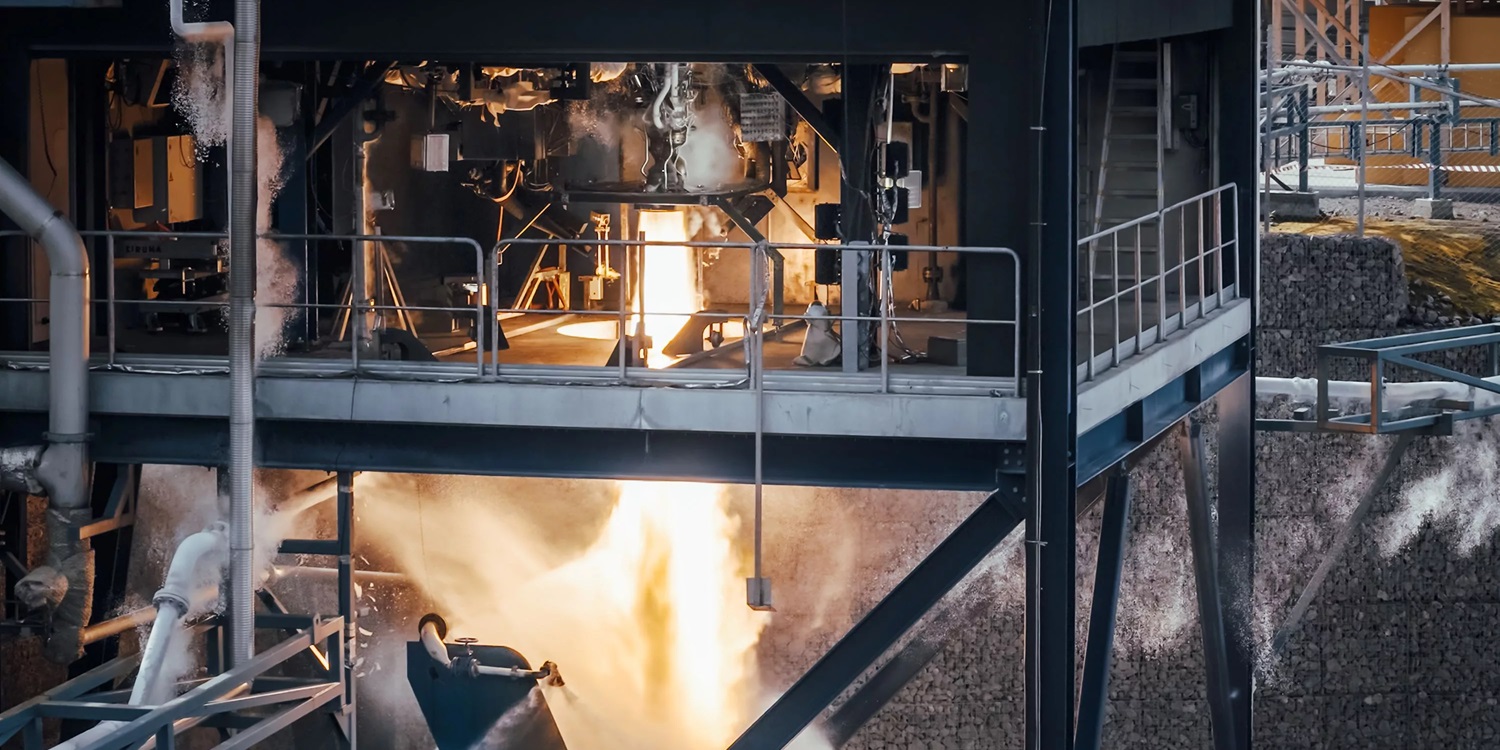
Space company Isar Aerospace is taking the next step in making access to space scalable by significantly expanding its testing operations at the Esrange Space Center in Kiruna, Sweden. In partnership with SSC Space, the company will establish a second test site to support the development and production ramp-up of its ‘Spectrum’ launch vehicle.

While Isar Aerospace’s new production facility near Munich is nearing completion, with interior fit-out works underway, the expansion at Esrange will unlock new capabilities in scaling launch vehicle production: the availability of integrated acceptance testing capabilities to match an increased launch cadence.

The purpose-built acceptance test facility will be capable of testing more than 30 engines per month and will enable fully integrated stage acceptance testing, providing Isar Aerospace with greater flexibility and capability to meet growing market demand for launch services. The test sites are fully tailored to Isar Aerospace’s own requirements, supporting the company’s approach of vertically integrating launch capabilities across design, manufacturing, testing, and operations.

“Scaling reliable access to space requires not only advanced launch vehicle design but also the right infrastructure to support rapid development and production. With our second test facility at Esrange, we are unlocking new capabilities and accelerating our progress. The expanded site will allow us to test and qualify more engines and stages than ever before, supporting our ambition to make space access truly scalable. I would also like to thank the team at SSC Space for their professional partnership and collaboration,” said Can Araz, Vice President Spectrum at Isar Aerospace.

“We are proud to deepen our long-standing partnership with Isar Aerospace as they expand their engine and stage testing capabilities at Esrange. This new facility strengthens Europe’s path toward scalable and reliable access to space, and it reflects the trust placed in our team’s experience in advanced rocket testing. Together, we are building the infrastructure that will enable a new generation of launch services and support the growing needs of the European space market,” said Mats Tyni, Director Business Development and Customer Operations, at SSC Space.

About Isar Aerospace

The European space company Isar Aerospace offers launch services for transporting small and medium-sized satellites and satellite constellations into Earth orbit. The launch vehicles used to transport these satellites are developed, manufactured, and tested almost entirely in-house. Headquartered near Munich, Germany, Isar Aerospace was founded in 2018 and has grown to over 400 employees from more than 50 nations, working across 5 international locations. Private funding from international investors provides strong backing for the company’s pioneering approach to scale and industrialize launch vehicle production through vertical integration.

About SSC Space

SSC Space (formerly Swedish Space Corporation) is a leading global provider of advanced space services, with more than 50 years of experience. We help space organizations, research institutes, commercial and institutional actors from all over the world to get access to space. With local presence on all continents and about 750 committed employees, we offer specialist expertise in satellite communications and satellite control services, spacecraft operations, rocket and balloon systems, launch services and flight test services, as well as engineering, operations and consultancy services for space missions. We enable successful space projects within Earth observation, telecommunications, security, meteorology, navigation and positioning, scientific research and other applications. Among our strongest assets are Esrange Space Center in northern Sweden, set out to be a leading provider of satellite launch services from mainland Europe, as well as one of the world’s largest commercial ground station networks for satellite communications.

Source: Isar Aerospace

Share on Social Media

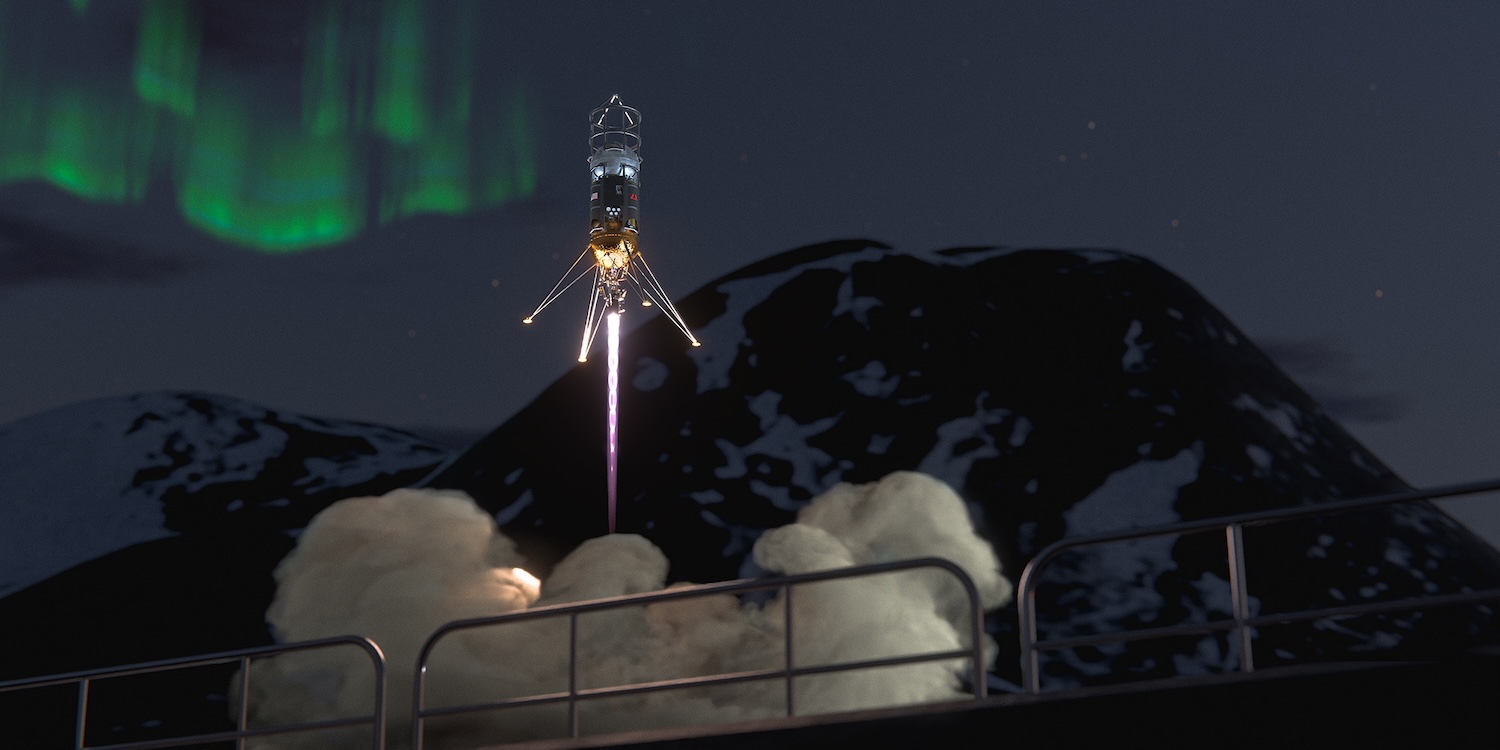
In a groundbreaking development for the European space industry, Andøya Space and Astrobotic Technology, Inc. have signed a landmark Term Sheet for a Launch Site Agreement. This collaboration marks a significant step towards enhancing commercial space capabilities in Europe, with Astrobotic utilizing Andøya Space as one of its launch and landing sites for its Xodiac reusable rocket campaigns starting in 2026.

The Term Sheet, signed in August 2025, outlines the main terms of the Launch Site Agreement that the parties intend to enter. Andøya Space has developed a state-of-the-art launch site at Andøya, Norway, and Astrobotic is committed to becoming a key partner, using Andøya Space for several of its Xodiac campaigns from continental Europe. Astrobotic plans to perform their initial launch campaign operations from Andøya Space starting in 2026.

This partnership is crucial for maintaining and enhancing the strategic space infrastructure in Europe. The collaboration aims to provide strategic autonomy, increased responsiveness, and faster deployment of new capabilities, benefiting both commercial and government stakeholders. Troels Sandreid, President of Andøya Spaceport, said: “Partnering with Astrobotic brings launch reusability to Andøya for the first time, through reusable rocket operations, further establishing our spaceport as a key European site for innovative commercial space operations.”

“Xodiac’s presence at Andøya represents a meaningful step toward delivering reliable, rapid, and cost-effective testing and demonstration capabilities to the European space market,” said John Thornton, CEO of Astrobotic. “By making a flight-proven, reusable rocket available to commercial and government partners, we’re enabling customers to accelerate the development of space systems in a dedicated environment built for innovation. We’re deploying the next generation of space systems that will take humanity further than ever before”

Security and compliance are paramount in this partnership. A comprehensive security concept will be established to meet regulatory requirements, and both parties will ensure compliance with applicable laws, the Technology Safeguard Agreement, and Andøya Space governing documents. This commitment to security and compliance underscores the importance of maintaining the highest standards in space operations.

Source: Andøya Space

Share on Social Media

Andøya Spaceport, strategically located in northern Norway at 69°N and 16°E, with orbital launch pads offering direct injection into Polar and sun-synchronous orbits (SSO), today announced a strategic collaboration with Exolaunch, a global leader in integration, rideshare missions, and deployment services. This partnership will leverage Exolaunch’s satellite processing expertise for Andøya Spaceport’s planned integration facility in the Spaceport Village at Nordmela, to become a hub for the small-satellite market in Europe.

“We welcome the partnership with Exolaunch to ensure our new facilities are designed efficiently and with our end-users in mind. Exolaunch’s experience with over 30 missions will provide valuable input during design and construction to best meet user needs”, says Andøya Spaceport President Ingun Berget.

“Supporting Andøya Spaceport while they scale their facilities and product offerings for orbital-class small launch vehicles is an exciting step for Exolaunch as we continue expanding our work in Scandinavia,” commented Robert W. Sproles, chief executive officer at Exolaunch. “Andøya Spaceport’ world-class infrastructure and prime location at the edge of the Arctic Circle make it a standout launch site for small satellite missions. Their capabilities complement our expertise in enabling ambitious small satellite missions, from precise orbit deployment to mission flexibility and costefficiency. At Exolaunch, we’ve built a track record of deploying hundreds of satellites with reliability, empowering operators to achieve their goals in science, technology, and connectivity. We look forward to working with the team at Andøya Spaceport and their customers to shape a dynamic future for small satellite launches in Europe and support the region’s emergence as a global leader in space innovation.”

About Exolaunch

Exolaunch (Germany, USA) is a global leader in launch mission integration and deployment technologies or small satellites. With a decade of flight heritage and over 520 satellites launched across 34 missions to date, Exolaunch leverages industry insight to tailor turnkey solutions that meet customer needs and respond to market trends. Exolaunch fulfils launch contracts for industry leaders, the world’s most innovative start-ups, research institutions, government organizations, and international space agencies. The company develops and manufactures its own flight-proven and industry-leading small satellite separation systems, with the fastest-growing heritage on the market. Exolaunch promotes safe, sustainable, and responsible use of space and is committed to making space accessible for all.

About Andøya Spaceport:

Andøya Spaceport is your efficient, predictable and versatile highway to space. We aim to provide tailored spaceport facilities and solutions to meet the surging global demand, from rapid-response missions to long-term constellation deployments. As Europe’s most efficient launch facility for small satellites, Andøya Spaceport is uniquely positioned to offer unmatched access to High Inclination, Polar and Sun-synchronous orbits. Together with our customers, the launch operators, we are committed to ensure safe and efficient launch solutions from Norwegian soil.

Source: Andøya Spaceport

Share on Social Media

MILAN, Italy – Today (October 13, 2024), eight commercial spaceports located across five continents signed a Memorandum of Understanding (MOU). The MOU will establish a forum to explore potential strategic collaboration in a range of areas of common interest and introduce a dialogue on establishing international spaceport standards. The signatories believe these discussions will strengthen assured access to space and improve affordability. The discussions facilitated by this MOU will also aid in the creation of shared opportunities to introduce technology innovations and foster global cooperation in the rapidly growing commercial space sector.

The MOU was initially developed by Space Centre Australia (SCA) and the Virginia Commercial Space Flight Authority (Virginia Spaceport Authority or VSA). Spaceports are adapting to the proliferation of new launch providers, the accelerating rate and breadth of change in space launch tempo and modes of operations, and the introduction of new launch vehicle and propulsion technologies. In doing so, the senior leaders of both organizations noted that, unlike the air transportation industry, no standing body exists for commercial spaceports to increase decision-makers’ awareness and understanding that spaceports are the unique irreplaceable foundation for all space activities. These facilities also are increasingly important to their host nations’ economic, national, and homeland security interests, and to the prosperity and stability of the international community.

The MOU establishes an intent to create a collaboration between commercial spaceport signatories to enable strategic collaboration, information and expertise sharing, and inclusive decision-making for topics of commonality and mutual benefit. As such, the signatories will establish an Executive Committee with an initial action to identify and prioritize the issues to be considered collectively, develop mechanisms for improved information sharing, and identify areas to enable interoperability resilience among spaceports MOU signatories. The Executive Committee also will establish working groups as needed.

The spaceports represented here today view today’s signing as an important first step to best position themselves and other commercial spaceports around the globe to collaborate and adapt successfully to a continuing tectonic transformation of every sector of space activities. With those objectives in mind, the MOU will remain open for other commercial spaceports to become signatories and help shape the course of future space endeavors in the 21st century.

The inaugural signatories to the MOU include:

  • Esrange Space Center, Swedish Space Corporation, Sweden
  • Hokkaido Spaceport, SPACE COTAN Co., Ltd., Japan
  • Virginia Commercial Space Flight Authority (Virginia Spaceport Authority), USA
  • Pacific Spaceport Complex-Alaska, Alaska Aerospace Corporation, USA
  • SaxaVord Spaceport, Scotland, United Kingdom
  • Space Centre Australia, Australia
  • Stargate Peru S.A.C., Peru
  • Sutherland Spaceport, Orbital Express Launch Limited, Scotland, United Kingdom.

“The signing of this MOU signifies a historic first in international commercial spaceport collaboration,” said Roosevelt “Ted” Mercer, CEO & Executive Director of Virginia Spaceport Authority. “This partnership demonstrates our collective commitment to underscore the importance of spaceports, supporting their future, and enabling a new era of innovation, security, and economic growth in the space industry. By aligning our efforts and combining our strengths, we can create a framework that supports the development of safe, sustainable spaceports that support growing demand.”

Hon. Scott Morrison, Former Australian Prime Minister, founder of AUKUS and Non-Executive Chair of Space Centre Australia said, “This Space-Port MOU announces the arrival of space related infrastructure as a new and maturing asset class that is increasingly engaging the attention of global investors. It also provides a platform for the sector to authoritatively engage with the regulatory, defence and security agencies of Government, as space becomes an increasingly important item on the strategic agenda of global political leaders. Such engagement will be vital to realising the extraordinary potential of the space sector.”

James Palmer, CEO of Space Centre Australia, stated, “This MOU represents a significant step forward in the development of global spaceport operations. By working together to establish standardized practices, we can enhance the resilience and responsiveness of launch systems, benefiting key stakeholders, including payload owners, investors, and regulatory agencies. This collaboration will help ensure that spaceports worldwide operate with greater efficiency and care, ultimately leading to more reliable and sustainable outcomes for the entire space industry. Through these partnerships, we are also opening the door to shared innovations that will drive continued progress in this rapidly evolving sector.”

"It is a great honor to have signed the MOU with the seven commercial spaceports across five countries. As the utilization of space by the private sector progresses, there is growing demand for frequent launches of rockets and satellites, as well as for international spaceport collaboration,” said Yoshinori Odagiri , CEO SPACE COTAN Co., Ltd. “HOSPO will cooperate with the other spaceports to pursue safe and sustainable spaceport operations that enable frequent launches of a variety of vehicles, including future Point-to-Point (P2P) flights, thereby contributing to the development of the space industry and the development of Hokkaido and Japan."

“We are witnessing the laying down the foundations of a historic landmark in this so-called ‘new space economy’, where significant actors such as us commercial spaceports come together as an emerging industry from all over the world to establish cooperation guidelines; for the particular case of Peru, I trust that this close coordination among us members shall attract technology and consequently foster the progress of our country and South America as a whole.” Juan Pedro van Hasselt, Stargate Peru S.A.C.

Hokkaido Spaceport/HOSPO (Japan) is the first public spaceport in East Asia, located in Taiki-town, Hokkaido, Japan. HOSPO will support the global space business industry as an infrastructure, provide a comfortable development and a business environment for many operators, launchers, and manufacturers.

Pacific Spaceport Complex - Alaska is operated by Alaska Aerospace Corporation, a state-owned company located on Kodiak Island, Alaska, USA. The spaceport has been launching suborbital and orbital missions since 1998. This U.S. Federal Aviation Administration-licensed orbital spaceport provides flexible, responsive and low-cost access to space for government and commercial customers.

SaxaVord Spaceport (UK) is the first fully licensed vertical launch spaceport in Europe and is located in Shetland, Scotland, United Kingdom. Shetland is the ideal location for Europe’s premier spaceport, with a long history of serving and supplying complex industries. SaxaVord Spaceport can support a wide range of requirements, from engine test benches to research and development. The spaceport has been designed to host a wide variety of launch missions.

Space Centre Australia is Australia’s first large-scale multi-use spaceport. It is committed to advancing the Australian and international space industries. Located in Northern Queensland, SCA is situated away from competing air corridors, in a no-population density area, allowing clear access to a range of orbital positions. Its facilities are safe and secure, providing close access to various launch destinations.

Stargate Peru S.A.C. is the forthcoming spaceport pending approval of the Peruvian Air Force and Peruvian Space Agency. Plans are to build a launch pad in Piura, Peru, providing a global gateway for satellites, airships, and other space resources. The site is roughly 300 miles from the equator in an area with favorable weather conditions throughout most of the year with immediate access through the South Pacific.

Sutherland Spaceport (UK) is located on the northern coast of Scotland and is poised to be the UK mainland’s first operational vertical launch site for small satellites. The Spaceport is well placed to meet the growing demand for European satellite launches in the commercial space sector. Launch operations conducted from Sutherland Spaceport provide safe access to high inclination Low Earth Orbits (LEO), Polar Orbits and Sun Synchronous Orbits (SSO) with orbital inclinations from 83° to 100°. With a clear focus on sustainability, Sutherland Spaceport plans to minimise its environmental impact, with the potential to contribute significantly to the UK's space industry and regional economic growth.

Swedish Space Corporation (SSC) has been operational since 1966. It is presently used by the international scientific community for launching sounding rockets for microgravity and atmospheric research as well as high altitude balloons for astronomy, atmospheric research and drop tests of space and aerial vehicles. A new infrastructure also offers reusable rocket tests, engine and fuel tests, as well as launches of satellites, making it the first site on EU territory with orbital launch capability.

Virginia Commercial Space Flight Authority (Virginia Spaceport Authority) is a political subdivision of the Commonwealth of Virginia and owns and operates the Mid-Atlantic Regional Spaceport (MARS) located at Wallops Island, Virginia, USA. VSA’s mission is to provide assured access to space by operating, maintaining, and growing a premier spaceport, stimulating aerospace-related economic development in the Commonwealth, and promoting educational opportunities in science, technology, engineering, and math (STEM).
Share on Social Media

Following a call for application issued by CNES, MaiaSpace has been selected to operate its reusable launcher from the former Soyuz launch pad (ELS) in the Guiana Space Center.

Up to now, the company was working on several European launch pad options for MaiaSpace launcher’s first flight and subsequent commercial exploitation phase. Teams can now focus operations and schedule on a baseline solution for the start of commercial exploitation in 2026 from the European spaceport in French Guiana. Selection criteria included, among others, request to launch at least 1.5 ton in Low Earth Orbit by 2027, to have credible business model, technical and financial maturity for the project, and environmental responsibility.

Former Soyuz launch pad in French Guiana (ELS) becomes the reference launch pad of MaiaSpace’s reusable launcher. This announcement is a critical milestone for MaiaSpace. Teams are more than ever confident in their ability to deliver, four years after the creation of MaiaSpace as a private and autonomous European company, competitive, innovative, scalable, future-proof and more eco-responsible space transport and space mobility solutions from 2026.

“The reuse of already existing launch pad infrastructures is perfectly in line with MaiaSpace’s approach to minimize as much as possible its environmental footprint, on Earth and in Space. In addition, such cost-effective solution will contribute to optimizing the level of its capital expenditures and therefore MaiaSpace’s business viability”, explained Yohann Leroy, CEO of Maiaspace. “With this decision, MaiaSpace is proud to contribute to the economic development and to innovation in French Guiana, through the investments of several tens of millions of euros for the adaptation of the launch pad to our needs, or the development of a local bio-sourced methane production sector. Finally, MaiaSpace demonstrates one more time the relevance to combine the best of both worlds, building tomorrow’s successes from yesterday’s rather than starting from a blank page, while maintaining the speed, the agility and the culture of risk of a start-up. This unique approach is key to provide our customers with the most competitive space launch and mobility services in their category.”

French Guiana is not only an ideal location for launching satellites into space, benefiting from the maximum slingshot effect generated by the rotation of the Earth, particularly for the deployment of satellite constellations in inclined orbit. Having a very wide opening onto the Atlantic Ocean, the Guiana Space Center allows access to all orbit inclinations and is also a must, perfect solution for recovering the Main Stage of the launcher on a barge at sea, few hundreds of kilometers off the coast. Last but not least, ELS allows outstanding perspectives of growth both in terms of launcher capability and launch rate.

Source: MaiaSpace

Share on Social Media

More Articles …